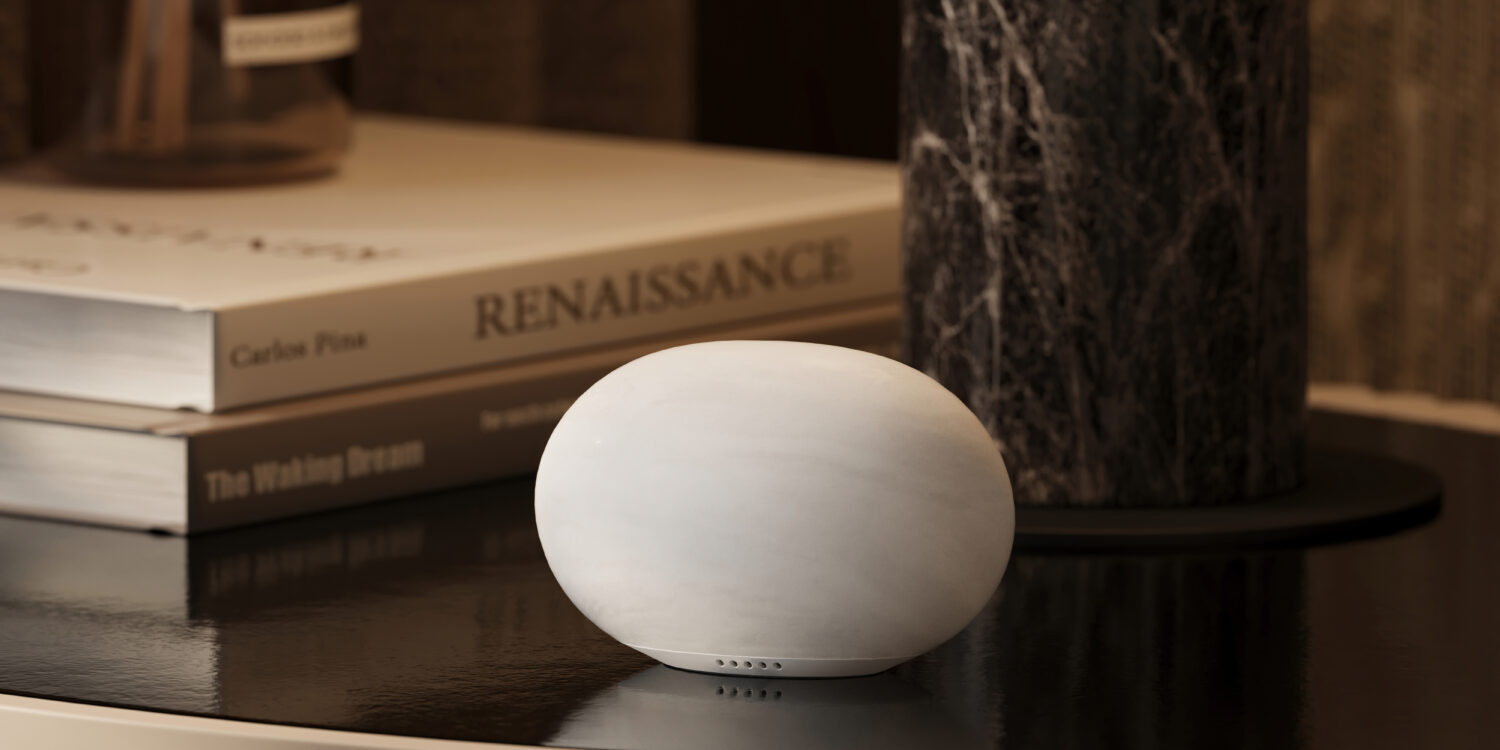
Products designed to better health
We design and engineer products that support people’s physical health and wellbeing, from adaptive therapy devices to technology built around healthier daily habits. Every product is engineered to hold up to real-world use, not just a lab demo.
A product development partner built for this sector
Products in this space are trusted with something personal: someone’s health, sleep, or daily wellbeing. We take that seriously in both the engineering and how we describe what a product does.
thinAir came to us with a product too expensive to manufacture. We redesigned it, cutting production cost by 23% and reducing a 26-piece enclosure to one, then validated its real-world impact through our own 15-day clinical trial. Paralympic champion Jaco van Gass credits it across 11 World Championship titles and 4 Paralympic golds.
Ocuwell needed an advanced prototype turned into a mass-producible, deployable device, resolving PCB heat, hygiene, and manufacturability issues along the way. Zebble took the same rigour somewhere different: a device built to break the cycle of phone-driven sleep disruption, engineered to look like anything but technology.





“npd bought into our vision from day one and pushed to create a product that we are all really proud of. The project was a huge challenge and the end result is already changing lives.”
Chris Kavanagh, CEO, thinAir
Design for manufacture, not just concept
thinAir’s original design was reliable in concept but too complex and costly to build at scale. We restructured it into logical sub-assemblies and reduced a 26-piece outer enclosure to one, cutting production cost by 23% and assembly time from days to hours.
Real-world validation, not just lab results
We don’t rely on internal assumptions alone. thinAir’s real-world impact was tested through npd’s own self-funded, independently overseen 15-day clinical trial with 9 participants, giving an honest picture of how the device performs. Paralympic champion Jaco van Gass credits it across 11 World Championship titles and 4 Paralympic golds.
Hygiene-conscious design
Products used on or near the body carry hygiene considerations that need to be designed in from the start. Ocuwell’s patient contact point was redesigned as a disposable, replaceable component once the original fixed part was identified as a hygiene concern.
Engineering for accessibility
Ocuwell needed to bring the function of larger clinical equipment into a pocket-sized, portable device, without cutting corners on the engineering. That meant resolving PCB heat issues across three iterations and navigating component obsolescence mid-development, rather than trading performance for size.
Designed around real behaviour, not just specs
Zebble needed to look and feel like a natural object, not a piece of technology, while still providing essential communication. That meant custom textures, specialised production methods, and miniaturised electronics that intentionally avoid the mental triggers associated with typical devices.
Health & Wellbeing FAQ
Both. thinAir came to us as an existing product that was too expensive to build and needed a full redesign for reliable manufacture at scale. Ocuwell and Zebble were both developed from earlier-stage concepts and prototypes.
Yes, where a product is used on or near the body, hygiene is built into the design process. Ocuwell’s patient contact point was redesigned as a disposable, replaceable component for exactly this reason.
Yes. thinAir’s redesign cut production cost by 23% and reduced its outer enclosure from 26 pieces to one, while improving overall build quality and assembly time.
Where it matters, we validate independently. thinAir’s real-world impact was assessed through a self-funded, independently overseen clinical trial, rather than internal testing or lab results alone