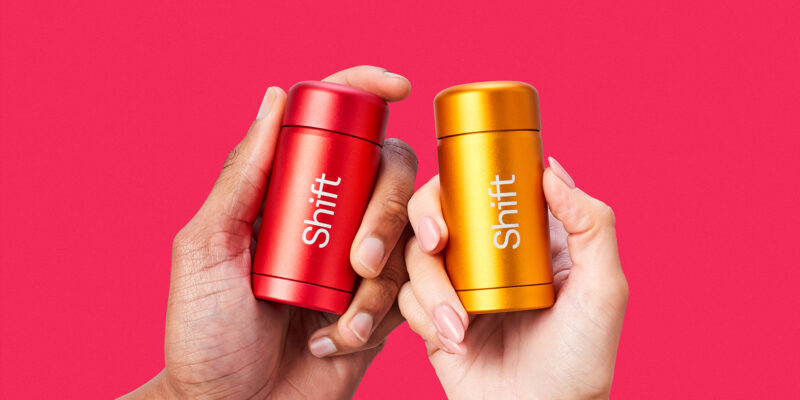
Industrial design is where a product’s form gets decided: how it looks, how it feels in the hand, and how easily someone understands what it does the first time they pick it up.
npd’s industrial design team works across consumer, defence and sports sectors, taking products from first sketch through to a design ready for manufacture.

Form and function, decided together
A good design decision rarely sits in one place: the shape of a housing affects how a component fits inside it, and a material choice affects both feel and cost at volume. That’s why npd works through form and function in parallel, not in sequence, starting fast and cheap with sketches, quick 3D prints and rough models you can hold and pass around, so problems show up before they’re expensive to fix and there’s a clearer answer to why someone would choose this product over what’s already on the market.

Designed to be made
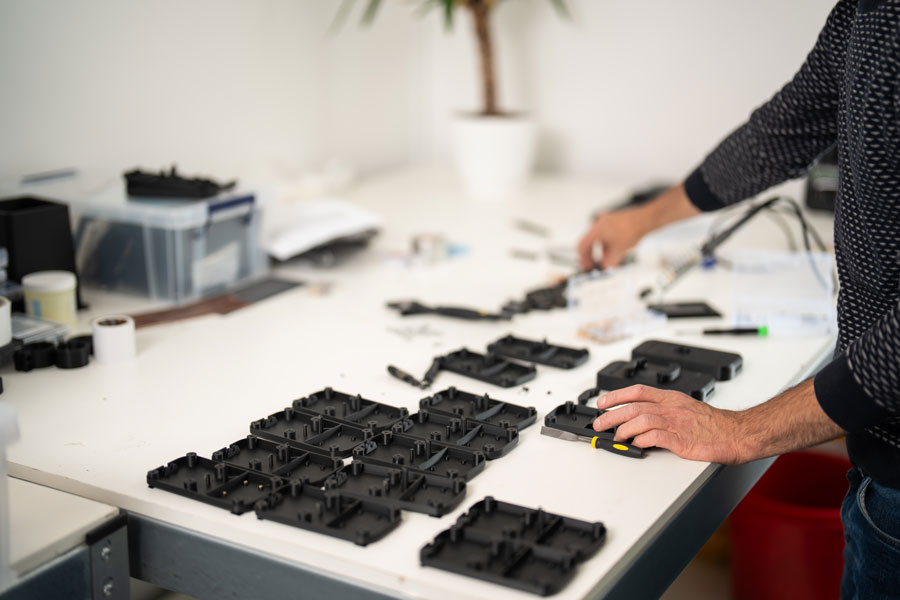
Every design npd produces is checked against how it will actually be manufactured. Creative freedom matters in the early stages, but a design that can’t be tooled, assembled or produced at the volumes a client needs isn’t finished. That’s the discipline npd applies from concept through to CMF (colour, material, finish) and design-for-manufacture sign-off.
Areas of Industrial Design Expertise
Form Development & Concept Generation
From sketch to physical model, shaping a product’s form before it’s locked in
User Experience Design
Designing how a product is held, understood and used, not just how it looks
Design Language Creation
Building a consistent visual identity across a product or product range
Human Factors & Ergonomics
Designing for how people actually move, reach and interact with a product
CMF (Colour, Material, Finish)
Choosing colours, materials and finishes that work in practice, not just in render
Design for Manufacture
Checking every design decision against how it will be tooled, assembled and produced
Frequently Asked Questions
Industrial design is the process of shaping a product’s form, materials and user experience so it works well, feels right to use, and can be manufactured at scale.
Industrial design shapes how a product looks, feels and is used. Product engineering makes sure it works reliably and can be manufactured. npd runs both in parallel.
Yes. CMF decisions are made alongside form and function, not after, so material and finish choices are practical to manufacture from the outset.
It depends on complexity, but concept work typically starts within days using sketches and rapid prototypes, with full design-for-manufacture sign-off following iterative refinement.
Yes. npd’s industrial design work feeds directly into prototyping, engineering and manufacture, so design decisions hold up through production.