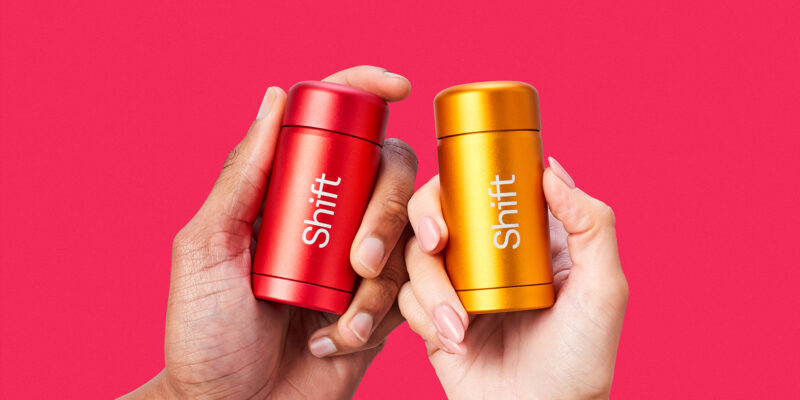
Most of a product’s environmental impact gets decided at the design stage, long before it’s manufactured. npd builds sustainability into product design from the first sketch through to end-of-life, covering material choice, circular design and lifecycle assessment, so environmental impact is minimised without giving up the qualities that make a product work.

Considering the whole lifecycle
Every material choice, fixing and finish has a lifecycle beyond the moment a product is manufactured. npd considers a product’s entire supply chain, from material selection through to what happens to it at end-of-life, so sustainability decisions are based on real evaluation rather than assumption.

Designing for reuse, repair and recycling
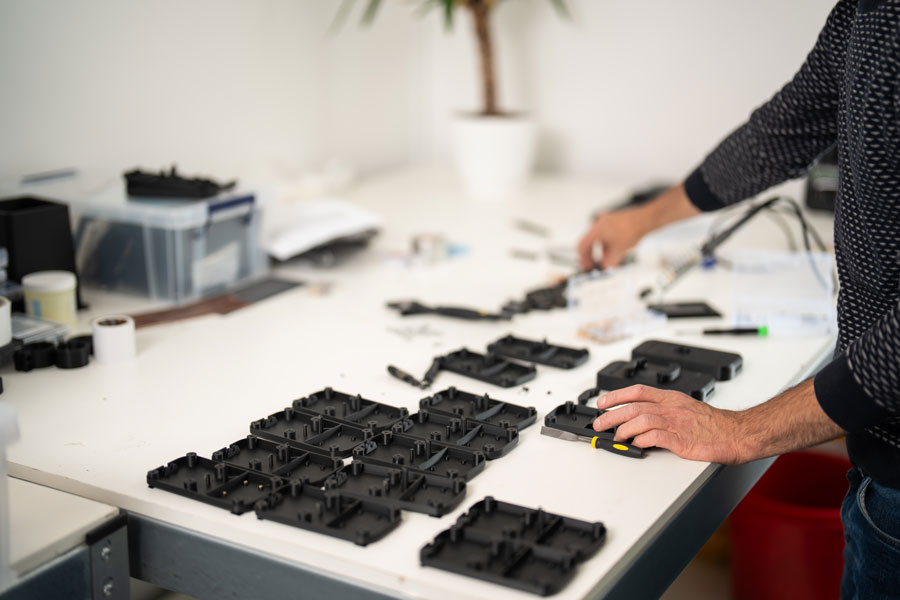
The standard model for a product is linear: make it, use it, dispose of it. Circular design changes that, designing products so they can be reused, repaired or recycled instead of discarded. Fixings instead of adhesives make a product easier to repair or take apart. Material choices that are genuinely recyclable, or in some cases compostable, reduce what ends up as waste.
Sustainable and commercially viable
Sustainable design isn’t only about environmental impact. A sustainable product still has to be commercially viable, so npd considers the environmental, social and economic factors together, rather than treating sustainability as a constraint that works against a product’s commercial case.
Areas of Expertise
Sustainable Materials
Choosing materials that reduce environmental impact without compromising performance
Lifecycle Assessment
Evaluating a product’s environmental impact across its full lifecycle, not just at manufacture
Circular Design
Designing products to be reused, repaired or recycled rather than discarded
Environmental Impact
Identifying where a product’s real environmental impact sits, and where design can reduce it
Design for Disassembly
Using fixings over adhesives so products can be repaired, upgraded or taken apart at end-of-life
Waste Reduction
Reducing material waste in both the product itself and the manufacturing process behind it
Frequently Asked Questions
Building sustainability into product design from the first sketch through to end-of-life, covering material choice, circular design and lifecycle assessment.
Yes. npd treats environmental, social and economic factors as connected, so sustainability decisions support a product’s commercial case rather than working against it.
Circular design means designing a product to be reused, repaired or recycled at the end of its life, rather than following a make, use, dispose model.
Yes. Lifecycle assessment looks at a product’s environmental impact across its full life, from material selection through to end-of-life, to identify where real improvements can be made.
As early as possible. Most of a product’s environmental impact is determined at the design stage, so sustainability decisions made early have the biggest effect.