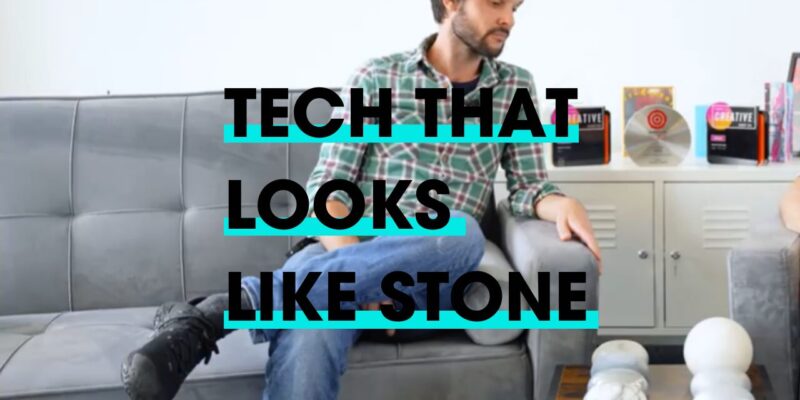
The Challenge: Making Tech Invisible
The client came to npd with an ambitious idea: a pared-back mobile device that would help people truly detach from technology. Our response was direct: if the ambition was to genuinely disconnect from tech, then it shouldn’t look like tech at all.
We asked the client to do something simple. Go for a walk on the beach. Find a pebble. Just one stone that felt right in your hand.
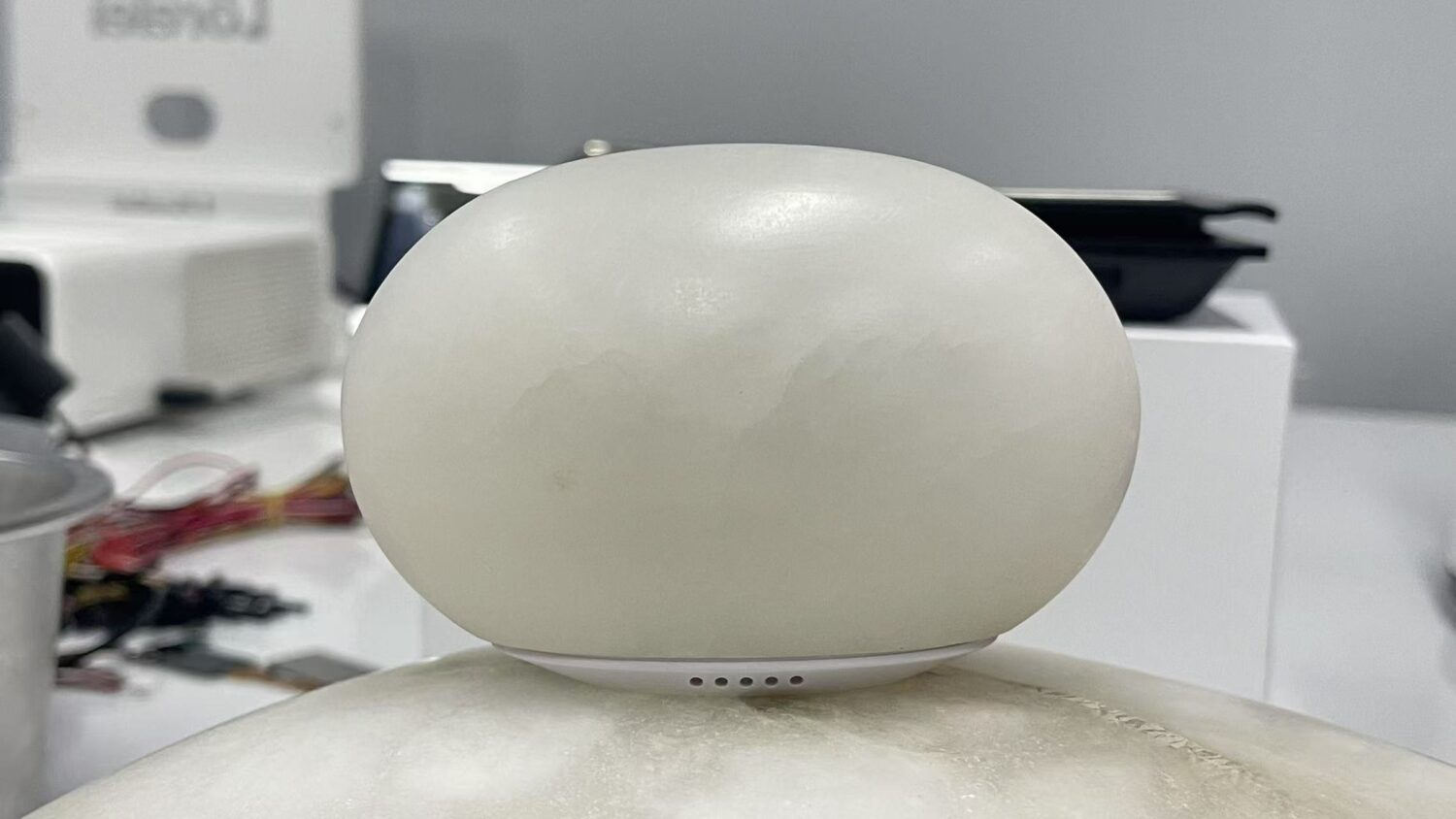
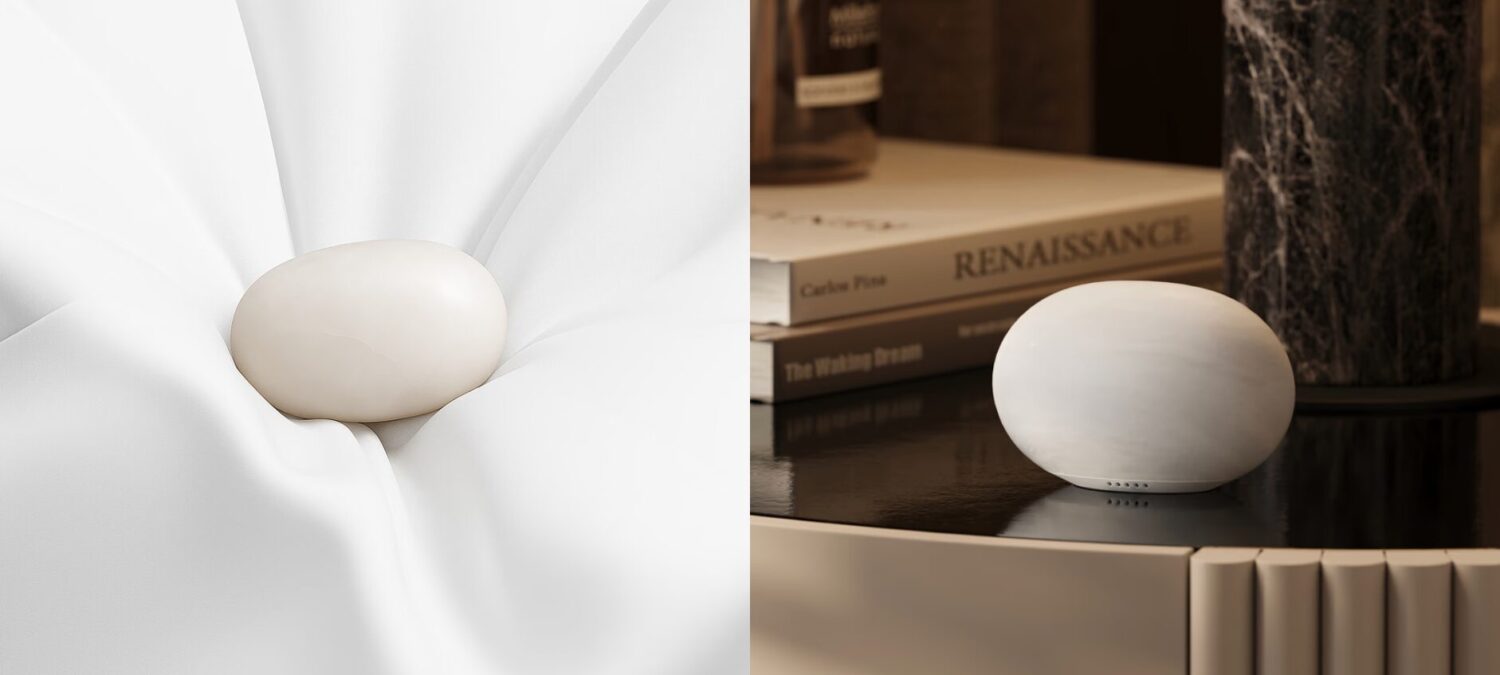
That pebble became the design brief for the entire product. We designed the whole concept around what she found—the shape, the weight, the way it felt. The Zebble isn’t a device that happens to look like a pebble. It is a pebble, hollowed out and filled with invisible technology.
This wasn’t a request for another smart alarm clock or fitness tracker. It was a request to fundamentally rethink what a sleep device could be.
The Core Design Philosophy: Disconnection Without Isolation
The central idea guiding every decision on the Zebble was simple but powerful: disconnect from your phone while remaining in contact with the people that matter to you.
This philosophy became the filter for design decisions. It meant:
- A screen that only appears when needed, minimising blue light exposure
- Touch controls with no visible physical buttons
- Materials and finishes that make the device feel like a natural bedroom object
- A notification system that shows who’s calling without constant digital interruption
The result was a device that acts like a phone when you need it to, but doesn’t have any of the drawbacks.
The Technical Challenge: Hiding the Display
One of the most complex aspects of the Zebble was the screen. Traditional bedside devices either blast light into your face all night (like alarm clocks) or create a constant visual reminder that you’re not asleep (like phones on nightstands).
The Zebble solves this differently. The screen remains hidden unless the user actively taps the device. When tapped, the display appears for exactly five seconds to show the time, then disappears completely. If someone calls, the screen displays the caller’s name—but only for the duration of the notification.
This approach addresses a real biological problem: blue light affects REM sleep. By keeping the screen off for the majority of the time, the Zebble minimises its impact on sleep quality.
But hiding a digital display whilst making it look like stone or pebble? That’s both a technical challenge and an aesthetic one.
Material Innovation: From Concept to Production
To achieve the visual goal of making tech look like natural stone, npd and the Zebble team tested multiple material finishing processes:
- PVD coating – Physical vapour deposition for durable, aesthetic finishes
- Hydro dipping – Water based transfer printing for organic patterns
- Custom material combinations – Partnering with material suppliers to find finishes that hid internal components whilst maintaining the desired aesthetic
This wasn’t design theory. This was real experimentation with actual manufacturers and specialists, testing dozens of iterations to find the right balance between functionality and form.
Full Lifecycle Design: Beyond the Prototype
At npd, design doesn’t stop when the prototype is delivered. The Zebble project demonstrates what full cycle involvement looks like:
Hardware & Software Development – Working with engineers to create innovative functionality that didn’t exist before. This wasn’t a copy paste integration of existing components; the Zebble required custom solutions for power management, display hiding, and touch sensitivity.
Packaging Design – Partnering with graphic designers to create cohesive branding. The packaging itself became part of the user experience—a slow reveal that reinforces the product’s core message of calm and connection.
Brand Development – Extending the Zebble identity across the app, website, and physical packaging to create a complete brand experience.
Manufacturing Partnership – Working continuously with suppliers on testing and refinement to ensure the production sample meets market standards. At the time of this project, the team was confidently preparing for launch with only minor tweaks remaining.
Why This Matters: Products That Deserve to Exist
The Zebble represents a specific design philosophy: making products that solve real problems and improve lives. It’s technology created with intention—not to add features, but to remove friction.
By disconnecting users from constant phone notifications whilst keeping them reachable to people who matter, the Zebble addresses a genuine mental health need. Better sleep means better mental health. Better presence means better relationships.
This is what npd means by “products that deserve to exist.”
The Innovation Involved in Making Something Simple
There’s a misconception that simple design means simple engineering. The opposite is true.
Making a device look like a pebble whilst hiding a screen, touch sensors, electronics, and connectivity required:
- Custom material treatments and finishes
- Innovative display technology
- Specialised manufacturing partnerships
- Collaboration across hardware, software, and industrial design
True simplicity in design requires profound complexity in execution.
Key Takeaways for Product Design
If you’re designing a consumer product that needs to feel natural in daily life, the Zebble offers several lessons:
- Start with a clear philosophy – Every design decision on the Zebble flowed from the core idea of disconnection without isolation. This clarity eliminated feature creep and conflicting design directions.
- Partner with specialists – Making tech invisible required working with material suppliers, manufacturers, and hardware/software engineers who understood both the vision and the technical constraints.
- Test extensively – From PVD coating to hydro dipping, the team tested multiple approaches to find the right solution. This iterative process can’t be rushed.
- Design the full experience – The Zebble’s success isn’t just about the device itself. Packaging, branding, and the app experience all reinforce the core message of calm and intentionality.
- Maintain involvement through launch – Working with suppliers through production ensures the final product matches the design intent. The Zebble team was actively refining the manufacturing process right up to market launch.
What’s Next for Sleep Tech
The Zebble is now moving towards commercial availability, representing a shift in how we think about devices in our most intimate spaces—our bedrooms.
As sleep tech becomes more sophisticated, the real innovation won’t be in adding more features. It will be in removing barriers and creating tools that genuinely help us rest. The Zebble is one example of what that looks like.
About npd Studio
npd is a product design consultancy in Preston, Manchester and London, specialising in hardware design, manufacturing partnerships, and full cycle product development. We work across defence, medical devices, industrial applications, and consumer products—always focusing on work that deserves to exist. We help clients take products from initial concept through market launch, staying involved at every stage of development.
Book a free consultation
